
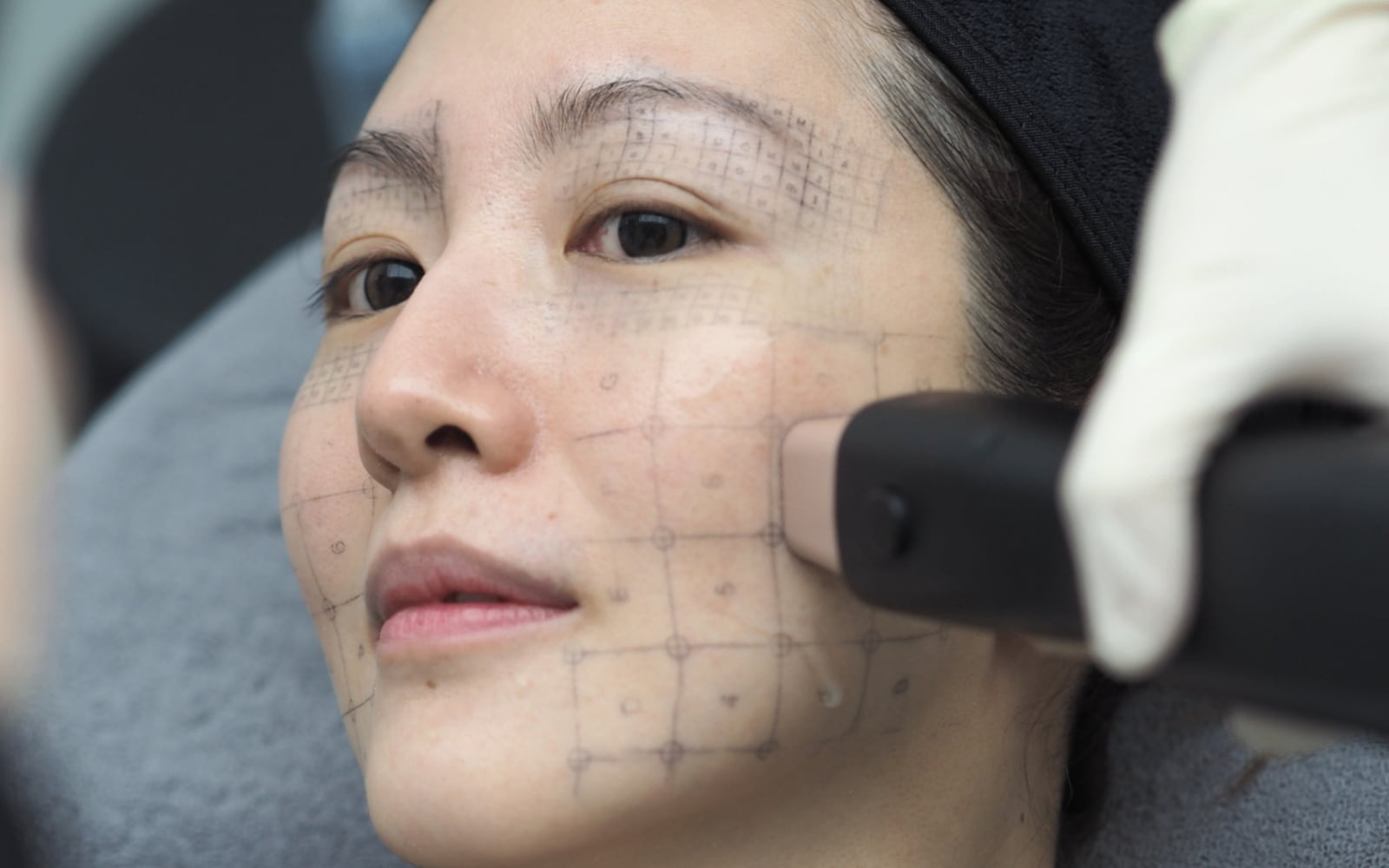
Ultherapy and Density RF are both non-surgical treatments for skin laxity, but they use different energy and reach the skin in different ways. Ultherapy and HIFU use micro-focused ultrasound to deliver heat at set depths, including the deeper SMAS support layer. Density RF uses radiofrequency to heat the dermis and stimulate collagen.
Neither is universally "better". The right choice depends on your anatomy and goals, which a licensed doctor assesses in person. This guide explains how each works and how that decision is made.
The short version
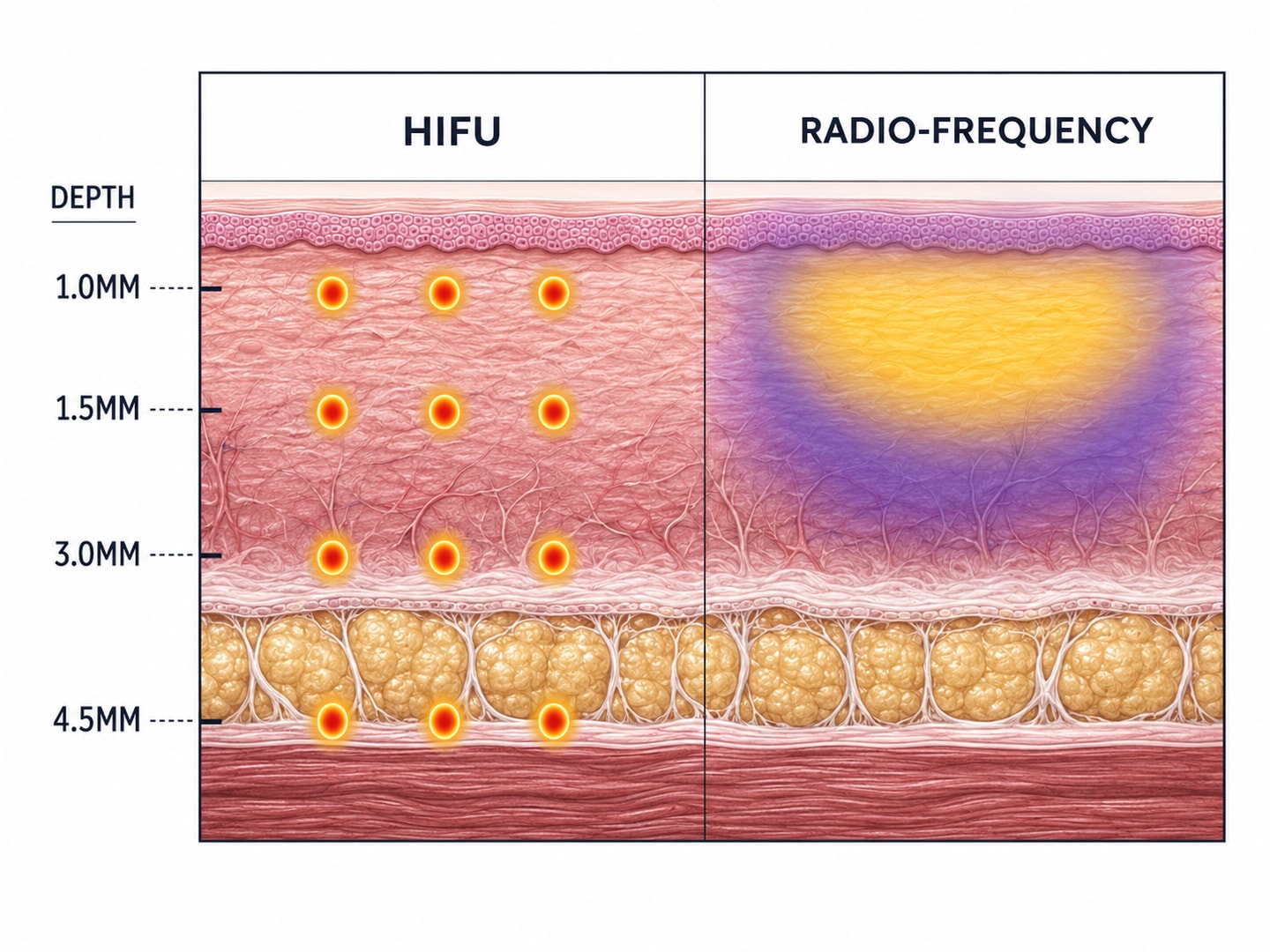
Ultherapy uses focused ultrasound and can target the SMAS layer at around 4.5mm, the same support layer a surgeon addresses in a lift. It includes ultrasound imaging so the doctor can see the tissue before delivering energy, and it is typically a single session. Density RF uses dual-mode radiofrequency to heat the dermis and prompt collagen and elastin production, with a cooling system designed for comfort, and it is typically one to two sessions with maintenance. The decision between them is clinical, not a matter of which device is "best".
How does Ultherapy work?
Ultherapy is micro-focused ultrasound with visualisation (MFU-V). It delivers focused ultrasound energy to precise depths, creating tiny points of controlled heating in the deeper tissue while leaving the surface skin untouched. Those points trigger your body's natural repair response, which builds new collagen over the following months.
Two features stand out. First, it can reach the SMAS, the deep structural layer that supports the face, which is why it is associated with a lifting effect rather than only surface tightening. Second, the visualisation element lets the treating doctor see the tissue layers in real time before placing energy. Ultherapy is cleared by the US FDA for non-invasive lifting of the brow, under-chin, and neck, and for lines on the décolletage, and it is registered with Singapore's HSA.
What to expect
Usually one session. Some tightening may be felt early, but the meaningful change develops over two to three months as collagen remodels, often lasting one to two years. There is essentially no downtime, though brief redness or swelling can occur. Because the deeper depth involves noticeable heat, doctors commonly use numbing or pain relief.
How does Density RF work?
Density RF, made by Jeisys, is a radiofrequency device. Rather than ultrasound, it passes radiofrequency energy through the skin to heat the dermis. What makes it a "dual-mode" device is that it combines a deeper monopolar pass with a shallower bipolar pass, with the aim of stimulating collagen and elastin at more than one level. A built-in cooling system protects the surface and is designed to keep the treatment comfortable, often without the need for numbing cream.
What to expect
Generally one to two sessions spaced several months apart, with annual maintenance. Downtime is typically minimal, with possible short-lived redness.
Ultrasound or radiofrequency, what actually differs?
| Ultherapy | Density RF | |
|---|---|---|
| Energy | Micro-focused ultrasound | Dual-mode radiofrequency |
| How it heats | Focused points at set depths | Volumetric heating of the dermis |
| Deepest target | Up to ~4.5mm (SMAS layer) | Dermis / subdermis |
| Sees tissue first | Yes (ultrasound imaging) | No |
| Comfort | Noticeable heat; numbing common | Cooling-assisted; often no numbing |
| Sessions | Usually 1 | Usually 1 to 2 + maintenance |
| Downtime | Minimal | Minimal |
| Evidence base | Extensive published studies | Mainly manufacturer data (newer) |
The point of the table is not to pick a winner. A difference in depth or energy tells you which treatment fits which presentation. It does not make one device superior in every case.
So how does a doctor decide which suits you?
At Reborn Skin Clinic, a licensed doctor, Dr Clement Leong, works through several factors before suggesting either treatment, or a combination:
Where the laxity sits
Deeper, SMAS-level descent, such as early jowling or brow heaviness, points toward the ultrasound approach. More surface-level dermal looseness may suit radiofrequency.
Your comfort threshold
Sensitivity to heat and preference around numbing genuinely affect the choice.
Your treatment history and skin condition
What you have had before, and how your skin responded, shapes the plan.
Maintenance and schedule
A single deeper session and a multi-session, comfort-forward plan are different commitments.
Can the two be combined?
Sometimes. Because ultrasound and radiofrequency act at different depths and in different ways, a doctor may use them in complementary roles. For example, one for structural lifting and the other for surface collagen support or maintenance between sessions. Whether that applies to you, and in what order, is decided at consultation rather than assumed.
At Reborn, the relevant options include HIFU Powerlift, Density Tighten Face, and Reborn Total Lift, which combines ultrasound and dual-RF in one session.
Frequently asked questions
Is Ultherapy the same as HIFU?
Ultherapy uses a form of focused ultrasound, but it is not the same as generic HIFU devices. Ultherapy includes real-time ultrasound imaging that lets the doctor see the tissue layers before delivering energy, which not all HIFU devices offer.
Does Density RF reach the same depth as Ultherapy?
They target different layers. Ultherapy can reach about 4.5mm, including the SMAS support layer, while Density RF heats the dermis and subdermis. Which depth matters for you depends on your anatomy and goals, and is best assessed by a licensed doctor.
Which treatment is more comfortable?
Comfort varies between people. Density RF is designed around a cooling system and is often done without numbing cream. Ultherapy, especially at the deeper setting, can involve more noticeable heat, so numbing or pain relief is commonly used. Your doctor will explain what to expect.
How many sessions will I need?
Ultherapy is usually a single session, with results developing over months and some people repeating after 12 to 18 months. Density RF is generally one to two sessions a few months apart, with annual maintenance. Individual plans vary.
How soon will I see results, and how long do they last?
With Ultherapy, results build gradually as collagen remodels, often noticeable within weeks and fuller by three to six months, potentially lasting one to two years. Density RF outcomes are reported by its manufacturer, and the practical timeline should be discussed with your doctor. Results vary between individuals and are not guaranteed.