
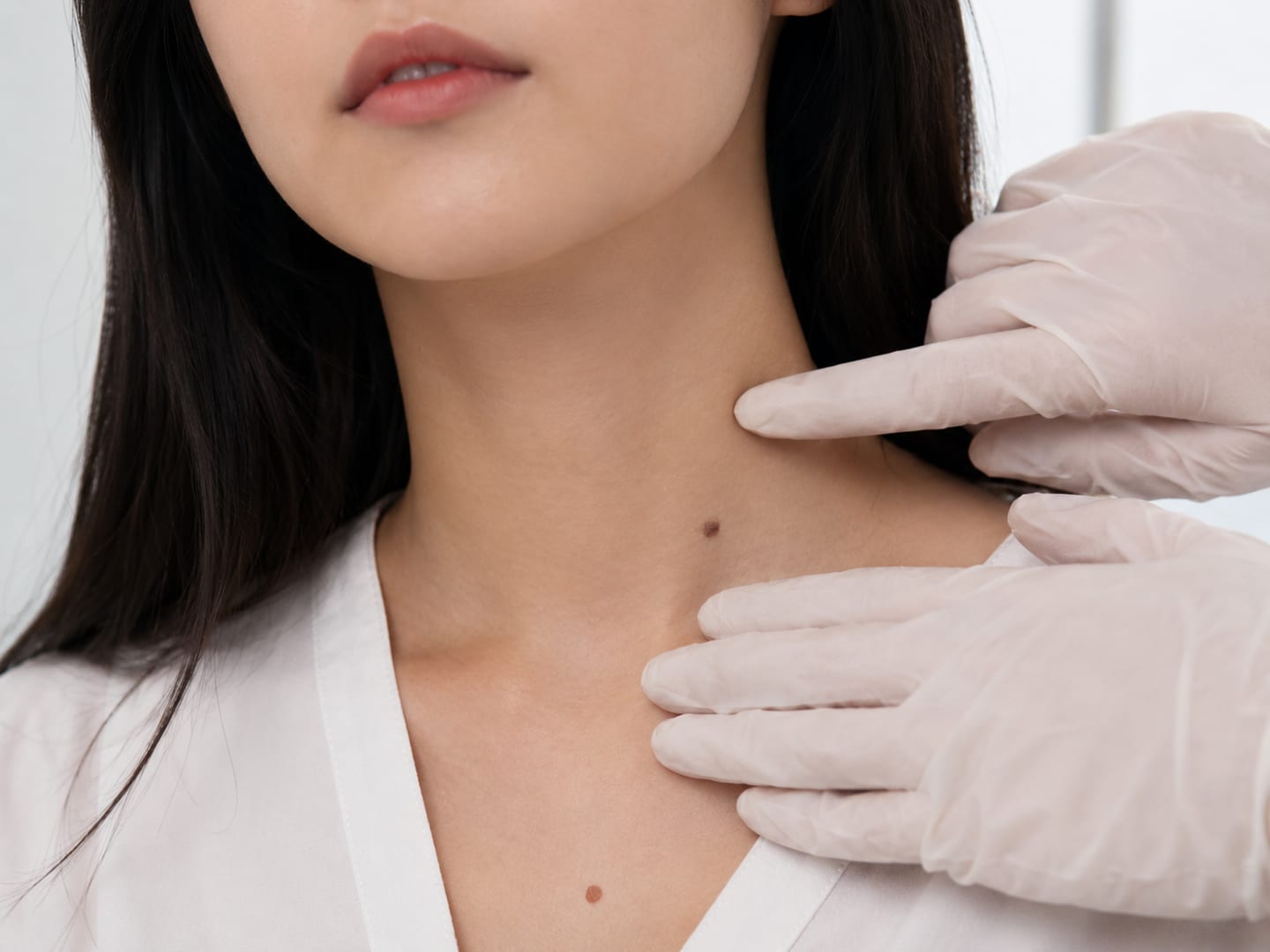
Before any mole is removed, it should be assessed by a doctor, because the right method depends on what the mole is. Most moles are harmless, but some need surgical removal for further examination if they are suspicious.
This guide explains how a doctor decides between laser or surgical removal, what affects the cost, and what recovery looks like in Singapore.
Start here: why assessment comes first
A mole is a cluster of pigment-producing cells. The vast majority are benign, but a small number are not, and the only way to tell with certainty is for a doctor to assess the mole and, in some cases, send the removed tissue to a laboratory.
This is the part many quick "mole removal" services skip, and it matters for your safety. If a suspicious mole is vaporised by laser, there is no tissue left to analyse. So the sensible order is always assessment first, method second. The method follows from what the doctor finds, not from personal preference or whichever option is fastest.
Know your moles: what makes one suspicious
Most moles are stable and harmless. The ones worth getting checked promptly tend to show the ABCDE warning signs:
Asymmetry
One half does not match the other.
Border
Edges are irregular, ragged, or blurred.
Colour
More than one colour, or uneven colour.
Diameter
Larger than about 6mm.
Evolving
Changing in size, shape, colour, or starting to itch or bleed.
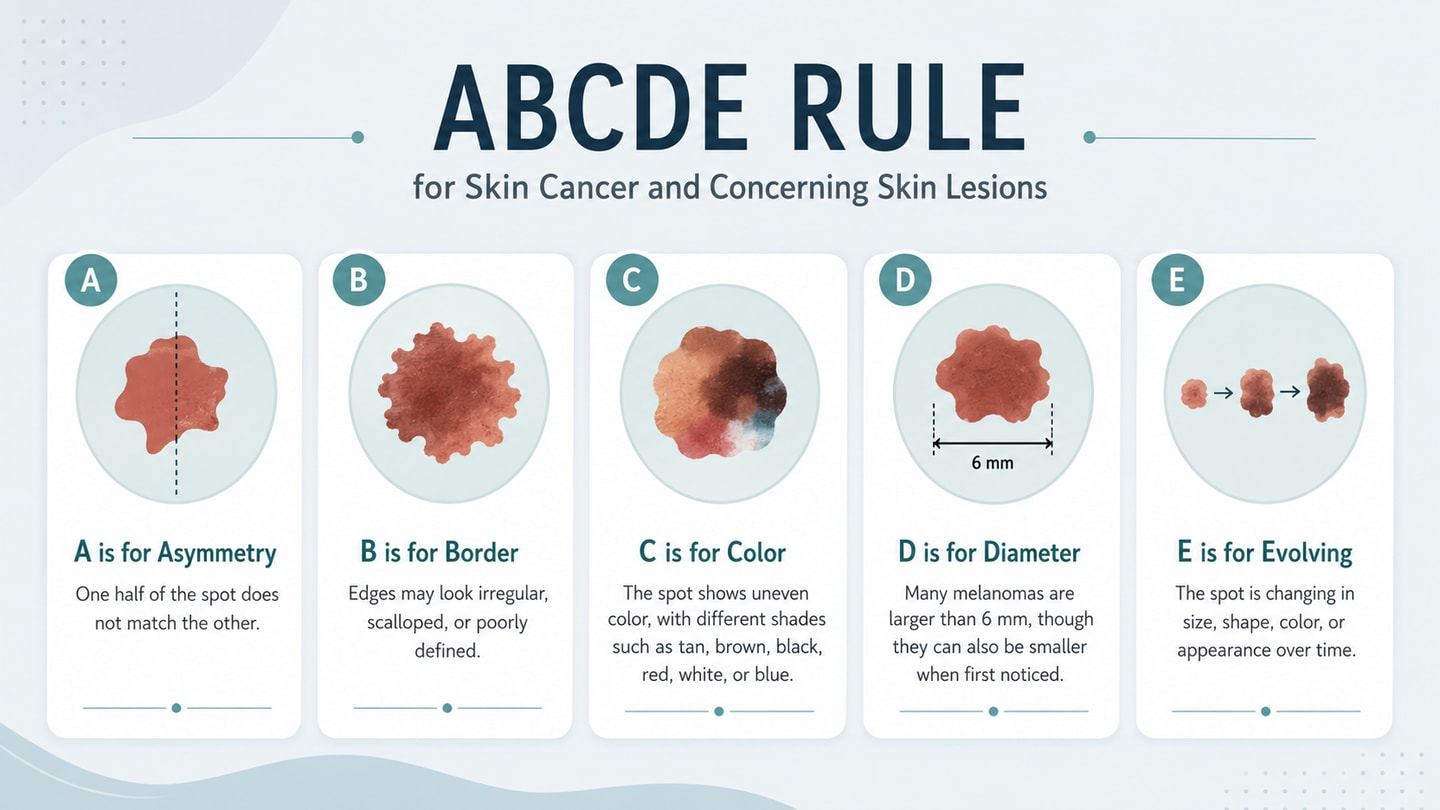
A mole that is changing, bleeding, or ulcerating should be seen by a doctor without delay. Moles present from birth and atypical moles also warrant assessment, since the approach to them can differ.
Mole removal methods, and how a doctor chooses
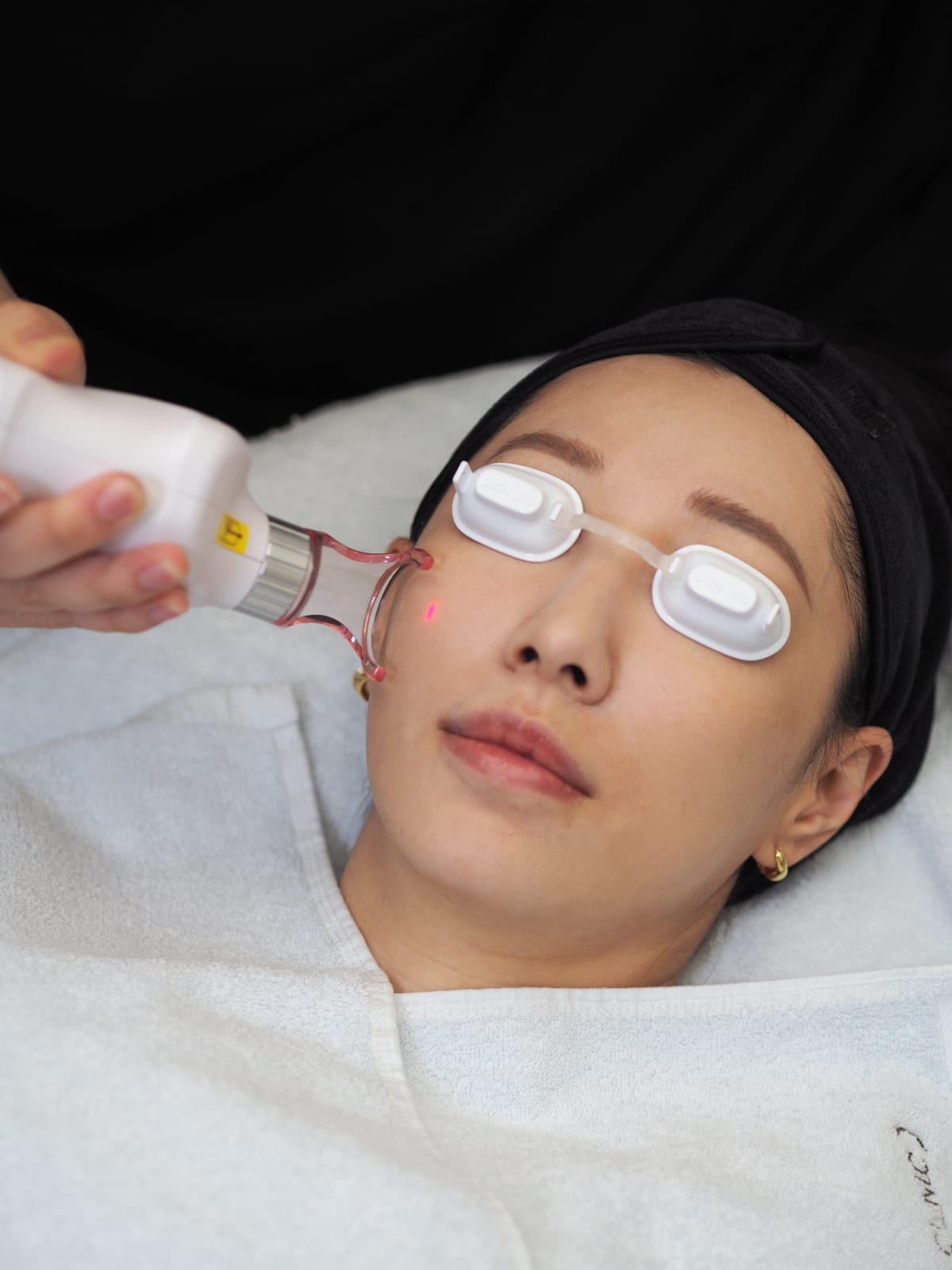
There is no single best method. Each suits a different situation, and the doctor selects based on the assessment.
Laser removal
- Best suited to
- Small and benign moles near the surface.
- What it involves
- The laser removes the growth and the area scabs and heals over roughly one to two weeks. Because the tissue is vaporised, laser cannot be used where a mole needs to be sent for analysis. There is also a small chance of recurrence over time.
Shave or radiofrequency removal
- Best suited to
- Raised, benign moles that sit above the skin.
- What it involves
- The mole is removed to skin level under local anaesthetic, usually healing within one to four weeks. The scarring and side effect rate is generally low to moderate depending on depth.
Surgical excision
- Best suited to
- Larger, deeper, or clinically suspicious moles.
- What it involves
- The mole is cut out and the wound is closed with stitches, which are typically removed after seven to ten days. Its key advantage is that the tissue can be sent for histological analysis, which is the only way to confirm whether a mole is benign or not. Recurrence is also very rare if done properly. It usually leaves a small linear scar which usually heals very well.
What about skin tags and warts?
Skin tags, warts, and milia seeds are different from moles, but they are often assessed and treated in the same visit. As with moles, they will be assessed benign before any laser treatment. Reborn offers this through its Laser Skin Tag, Wart and Mole Removal treatment, which is doctor-administered, with each lesion assessed beforehand. If you have a few different spots you have been meaning to sort out, it is reasonable to request a consultation and have them looked at together.
What affects the cost of mole removal in Singapore
Cost is one of the most searched questions, and the honest answer is that it is set at consultation once the doctor has assessed the mole, because several factors move it:
The method
A shorter laser treatment differs from a surgical excision that involves stitches and a follow-up visit.
Size and depth
Larger or deeper moles take more time and experience to do well, and for surgical cases, more involved closure.
Number of moles
Treating several in one session changes the total.
Whether laboratory analysis is needed
If the doctor sends tissue for histology, that is an added but necessary medical step for suspicious moles.
Location on the body
The face and the body involve different precision and healing considerations.
Your doctor will recommend the appropriate method and give you a cost estimate at consultation.
What to expect: before, during, and after
Before
Avoid sun exposure on the area and tell your doctor about any medications.
During
The area is numbed with local anaesthetic for comfort, then the lesion removed. A dressing may be applied if appropriate.
After
Keep the area clean, protect it from the sun, and follow the aftercare you are given. Scarring depends on the method, the mole's size, and how your skin heals. Moles and warts can sometimes recur, particularly after laser, and new moles can also develop over time, so a follow-up may be advised.
Should you try to remove a mole at home?
No. Home removal risks infection, scarring, and, most seriously, delaying the diagnosis of a skin cancer if the mole turns out to be suspicious.
It is not a method and not a way to save on cost. A short assessment is far safer.
Frequently asked questions
Can a polyclinic remove my mole in Singapore?
Polyclinics can usually assess and refer, but generally do not perform mole removal in-clinic. A private clinic or a hospital dermatology department is the more typical pathway for assessment and removal.
How do I know if removal is medical or cosmetic?
A doctor assesses your mole for the ABCDE signs and any changes. If it looks suspicious, removal with laboratory analysis may be medically indicated. If not, removal can be a cosmetic choice, but only after a clear medical assessment.
Can laser remove any mole?
Laser suits smaller and benign moles. It is not appropriate for moles that may be atypical or cancerous, or for larger or deeper moles. Surgical excision is recommended in those cases.
Will the mole grow back?
Skin tags, once fully removed, do not return at the same spot. Moles and warts can recur depending on the method and individual factors, especially if they are very deep and some microscopic pigment remains. Your doctor will advise on the likelihood for your mole.