
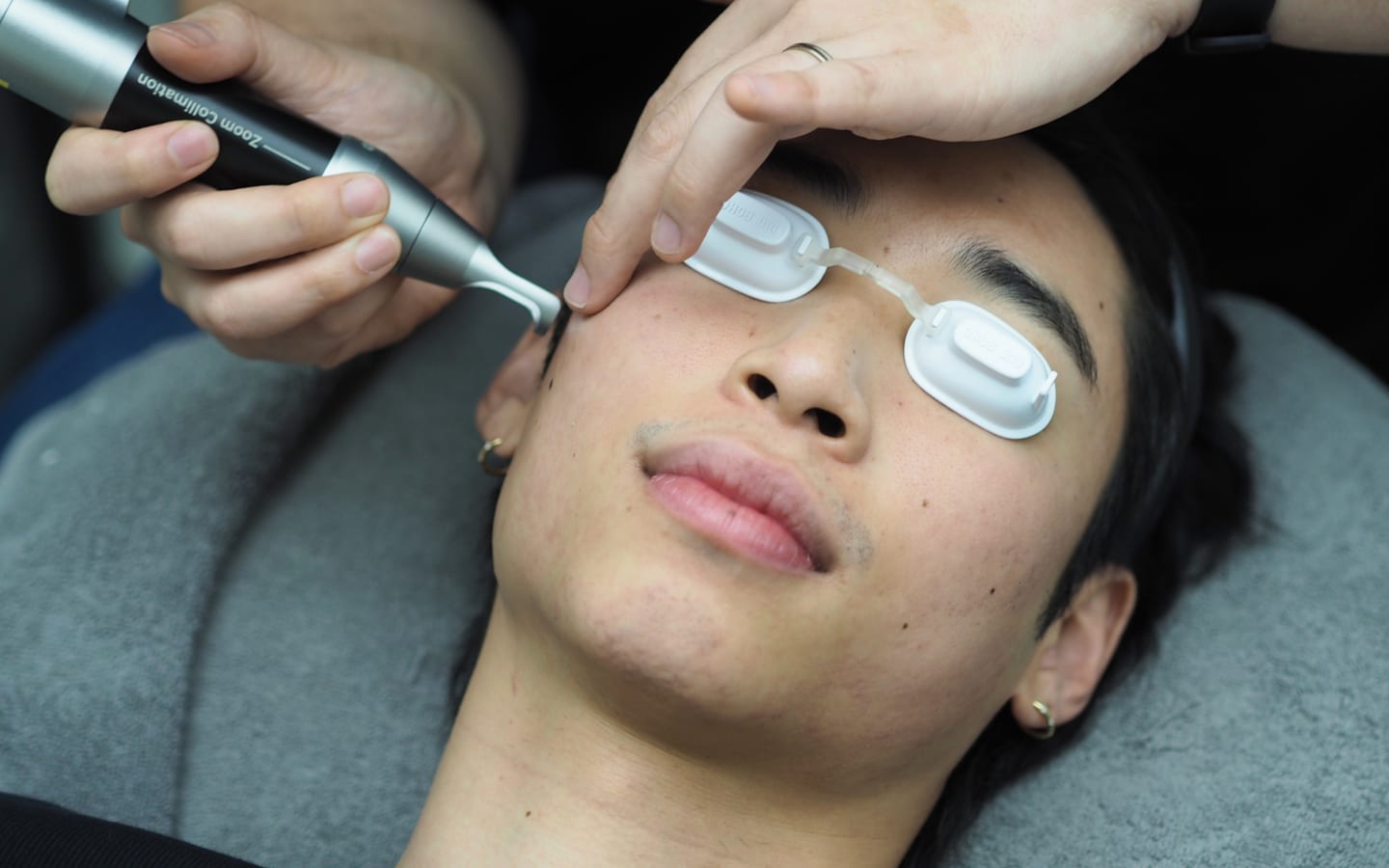
Pico laser and fractional laser are both popular skin treatments in Singapore, but they are built for different jobs. Pico laser uses ultra-short pulses to shatter pigment and is most associated with pigmentation, dull tone, and minimal downtime. Fractional laser works by heating tiny columns of skin to drive resurfacing, and is more associated with deeper concerns like atrophic acne scars and texture.
Neither is "better" in general. The right choice depends on your concern, your skin type, and how much downtime you can take, which a licensed doctor assesses in person.
What is pico laser and how does it work?
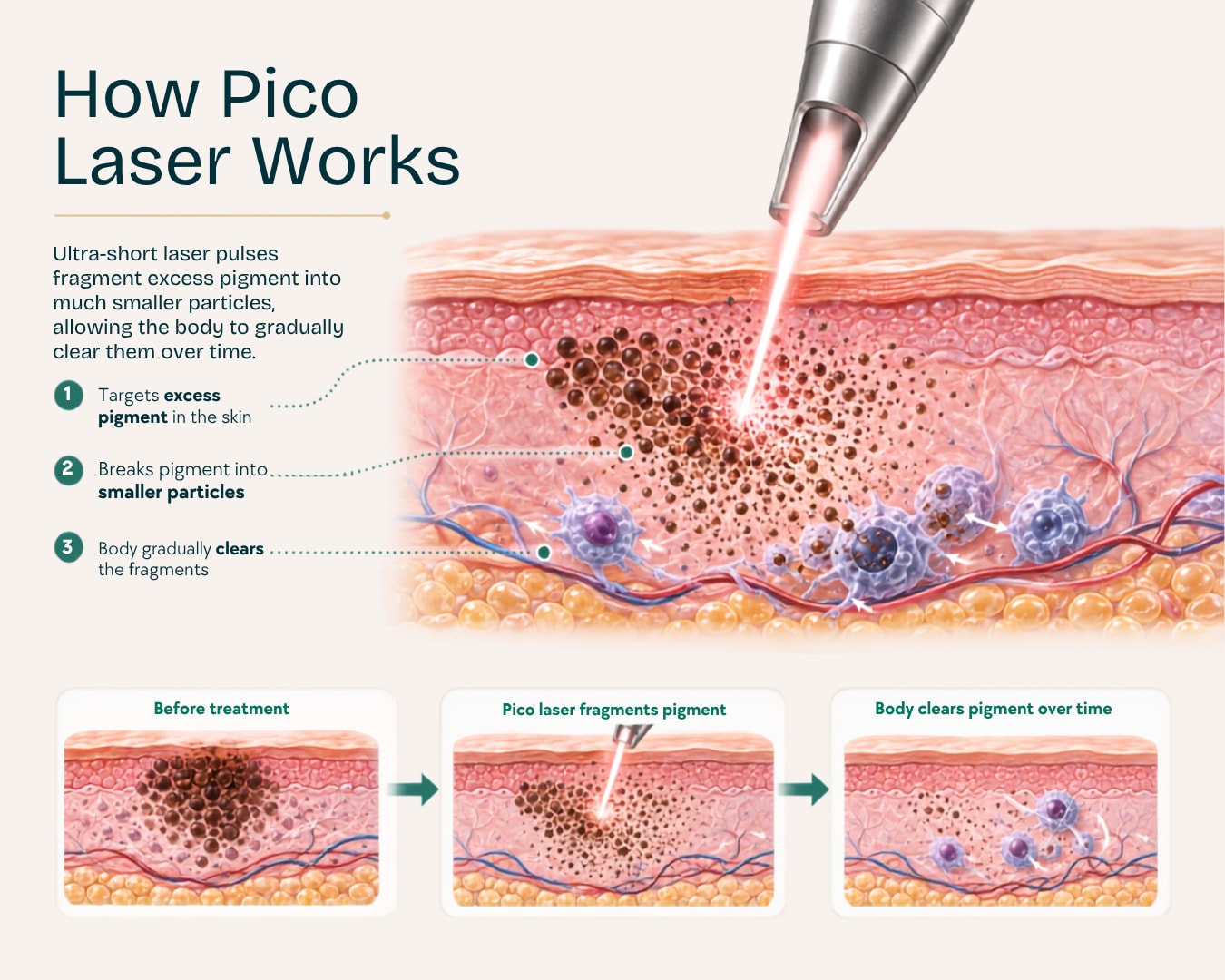
Pico laser delivers energy in picosecond pulses, which are about a thousand times shorter than the older nanosecond lasers. Because the pulse is so fast, it works mainly through a photoacoustic effect: it creates a rapid pressure wave that breaks pigment into very fine particles, which the body then clears, with relatively little heat passing to the surrounding skin.
That low-heat mechanism is part of why pico lasers are often discussed for Asian skin. Singapore skin types tend to be more prone to post-inflammatory hyperpigmentation (PIH), and treatments that generate less heat carry a lower risk of triggering it.
Pico laser is commonly used for:
- Pigmentation such as sunspots, freckles, and some forms of melasma
- General skin tone, dullness, and enlarged-looking pores
- Tattoo removal
- Mild to moderate acne marks
Some pico devices also have a focused mode that creates tiny zones of energy in the dermis to stimulate collagen, without removing the skin surface. Downtime ranges from almost none in toning mode to a few days in the more intensive modes.
What is a fractional laser and how does it work?
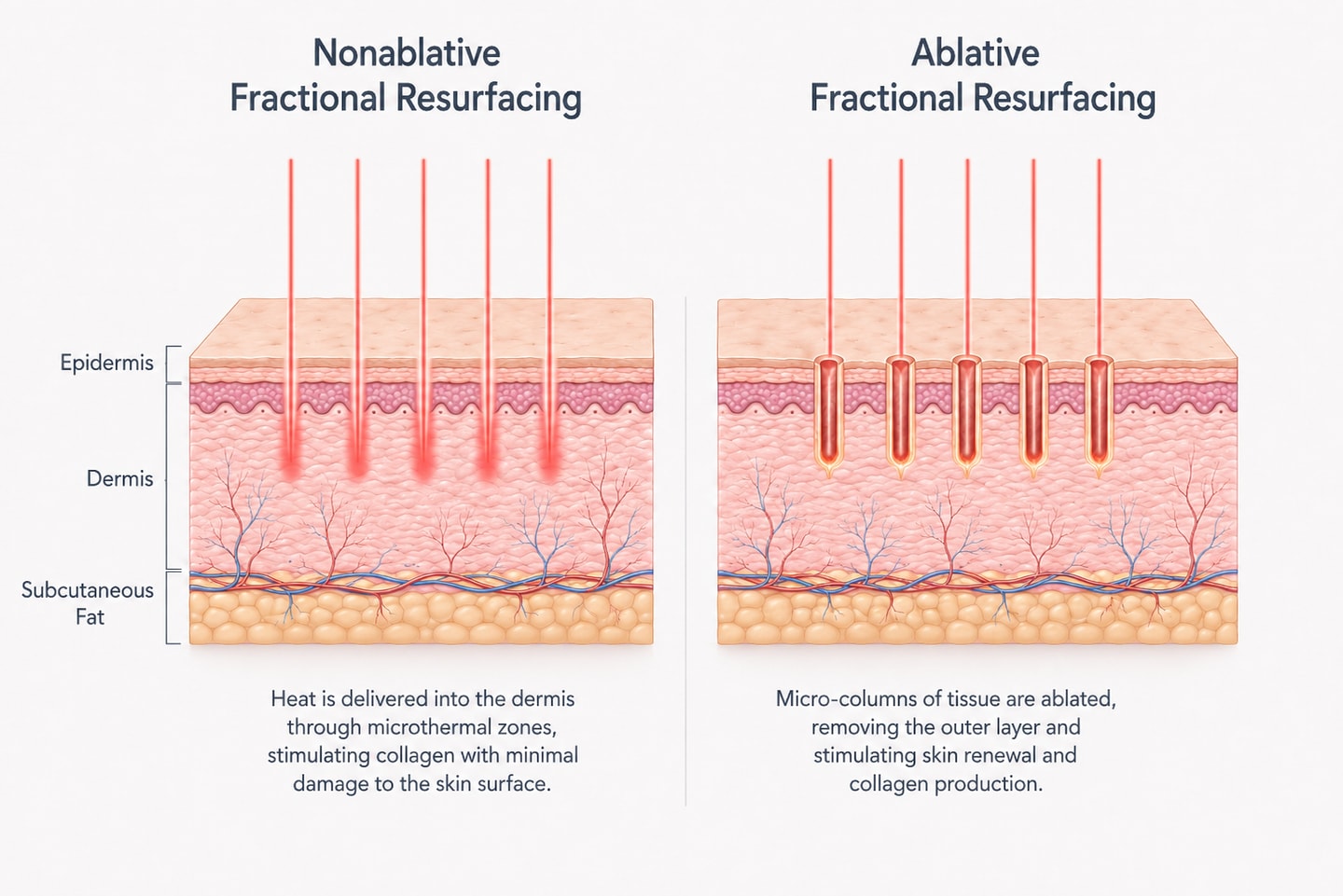
Fractional laser takes a different approach. Instead of treating the whole surface, it sends energy into thousands of microscopic columns of skin, leaving the skin in between untouched so it can heal faster. There are two broad categories:
Non-ablative fractional
Heats those columns without removing the surface layer. It stimulates collagen with moderate downtime.
Ablative fractional (such as fractional CO2)
Vaporises the microscopic columns through the surface. It drives stronger remodelling but involves more downtime.
Fractional laser is more commonly considered for:
- Moderate to deep atrophic acne scars (boxcar and rolling types)
- Deeper textural irregularities and resurfacing
- Stretch marks and some surgical scars
Because it relies on heat, fractional laser carries more PIH risk in darker skin tones, especially the ablative version, so settings need to be chosen carefully by an experienced doctor.
Pico laser vs fractional laser: a side-by-side overview
| Pico laser | Fractional (non-ablative) | Fractional (ablative) | |
|---|---|---|---|
| How it works | Photoacoustic (shatters pigment) | Heated micro-columns, surface intact | Heated micro-columns, surface vaporised |
| Strongest for | Pigmentation, tone, tattoos | Moderate texture and scars | Deeper scars, resurfacing |
| Collagen stimulation | Via focused mode | Yes | Yes, stronger |
| Typical downtime | 0 to 7 days (mode-dependent) | 3 to 5 days | 5 to 10 days |
| PIH risk in darker skin | Lower | Moderate | Higher |
There is no "winner" column on purpose. The two lasers are different tools, and the useful question is which one fits your concern.
Which skin concerns point toward pico laser?
If your main issue is pigmentation, uneven tone, dullness, or you want a treatment with minimal recovery time, pico laser is often the part of the conversation a doctor starts with. It also handles tattoo removal, which fractional laser does not. For Singapore patients juggling work and a high-UV climate, the shorter recovery window and lower PIH risk are genuinely practical advantages.
Which skin concerns point toward fractional laser?
If your main issue is deeper, structural acne scarring or significant texture that pigment-targeting treatments will not reach, fractional laser is more commonly considered. It works at the level of collagen remodelling, which is what those deeper concerns need. The trade-off is more downtime and, in darker skin, more care around settings.
Why Singapore's skin environment matters
Singapore sits near the equator with a high UV index all year. Two things follow. First, pigmentation is extremely common and tends to recur, so sun protection is part of any laser plan, not an afterthought. Second, prolonged sun avoidance after an aggressive resurfacing treatment is harder to maintain here, which makes downtime a real consideration rather than a footnote. A doctor factors this in when recommending an approach.
If you are weighing up your options, a non-ablative laser treatment such as Reborn's Luminance Glow Laser is one example of a gentler, lower-downtime approach for pigmentation and skin maintenance. Whether it suits you is something a licensed doctor confirms after assessing your skin. If you are unsure which direction makes sense, you can request a consultation to talk it through.
Can pico and fractional laser be used together?
Sometimes. A patient who has both pigmentation and deeper scarring may benefit from a combined plan that uses each laser for what it does well. Whether that is appropriate, and in what order, is a clinical decision made after a skin assessment rather than a standard recommendation.
How a doctor decides which laser is appropriate
There is no universal answer, which is exactly why the consultation matters. A doctor weighs the depth and type of your concern, your skin type and PIH risk, and how much downtime you can realistically take. From there, the choice between pico, fractional, or a combination follows the assessment, not a preference for one machine.
Frequently asked questions
Is pico laser or fractional laser better for acne scars?
It depends on the scar. Pico laser, especially in focused mode, may help with superficial to moderate marks, while fractional laser, particularly ablative, is more commonly used for deeper, structural atrophic scars. A licensed doctor assesses scar depth and skin type before recommending an approach.
Which laser has less downtime?
Pico laser in toning mode usually involves minimal downtime, with redness settling within a day or two. More intensive pico modes may involve a few days. Non-ablative fractional typically involves three to five days, and ablative fractional five to ten. Exact recovery varies by individual and treatment intensity.
Is pico laser safe for darker skin tones?
Pico laser produces less heat than older lasers, which is associated with a lower risk of post-inflammatory hyperpigmentation in melanin-rich skin. Ablative fractional carries a higher PIH risk in darker tones and needs careful settings. Suitability is assessed individually.
How many sessions will I need?
This varies by concern and skin type. As a general guide, pico laser for pigmentation may take several sessions, and fractional laser for scars may take a few sessions depending on whether it is non-ablative or ablative. A doctor recommends a plan after assessing your skin.
Can I combine pico and fractional laser?
Combination plans exist for patients with both pigmentation and structural scarring. Whether it is appropriate depends on your skin and is decided by a doctor, not applied to everyone by default.