
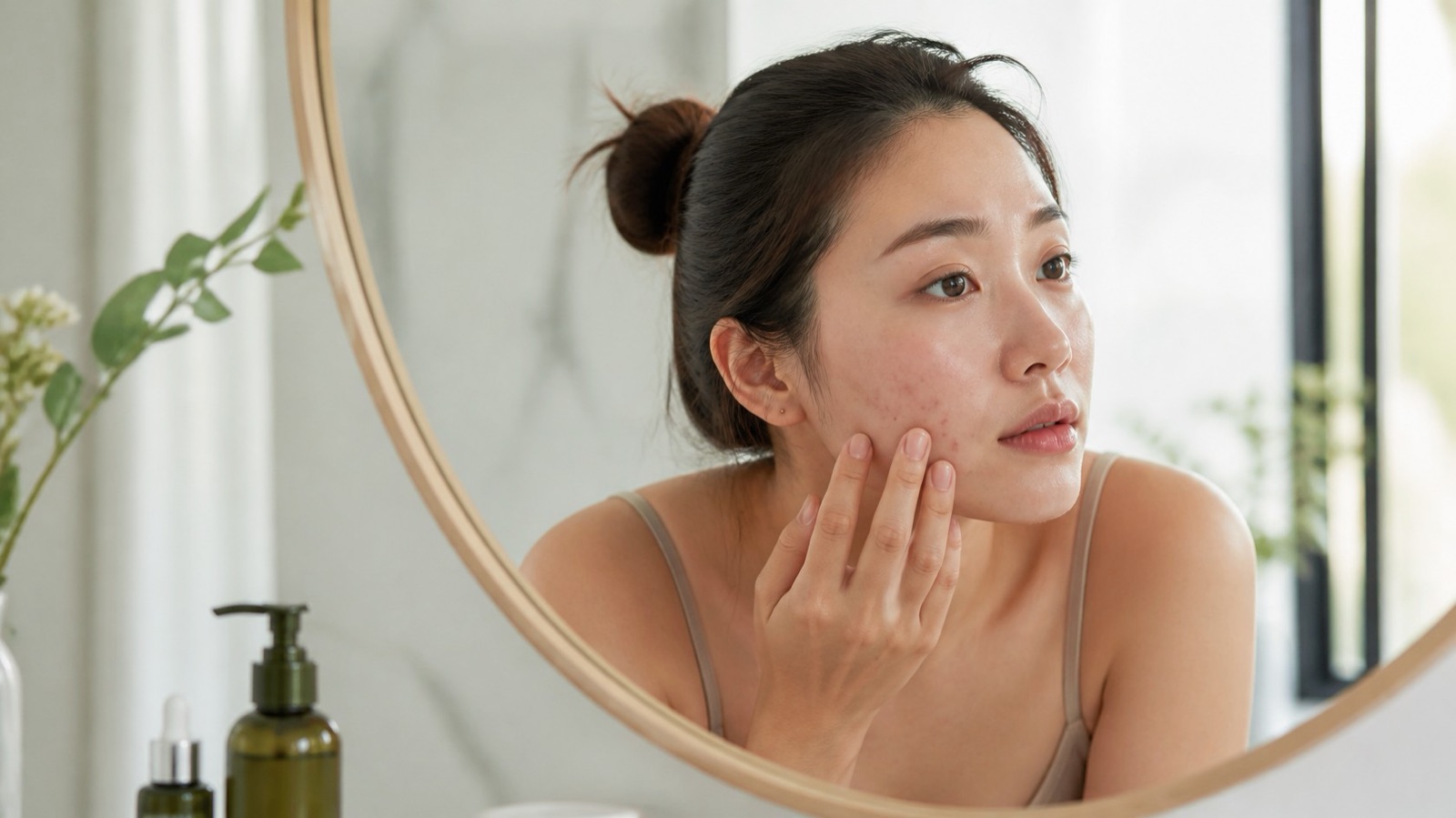
You booked a facial or peel to get clearer skin, and a few days later there are new bumps. Is your skin "purging", or is it reacting? It's one of the most common questions after any new treatment, and the answer matters. Purging is something you wait out. A reaction is something you stop. Here's how to tell which one you're looking at.
What does skin purging actually mean?
"Purging" is the popular name for acne seeming to get worse after you start a new treatment, before it gets better. It's most often talked about with acne medicines and products that speed up skin turnover.
The catch is that "purging" has become a catch-all for any new bump, and not every bump after a treatment is a purge. Sometimes it's a regular breakout that happened to land on the same week. Sometimes it's your skin telling you something didn't agree with it.
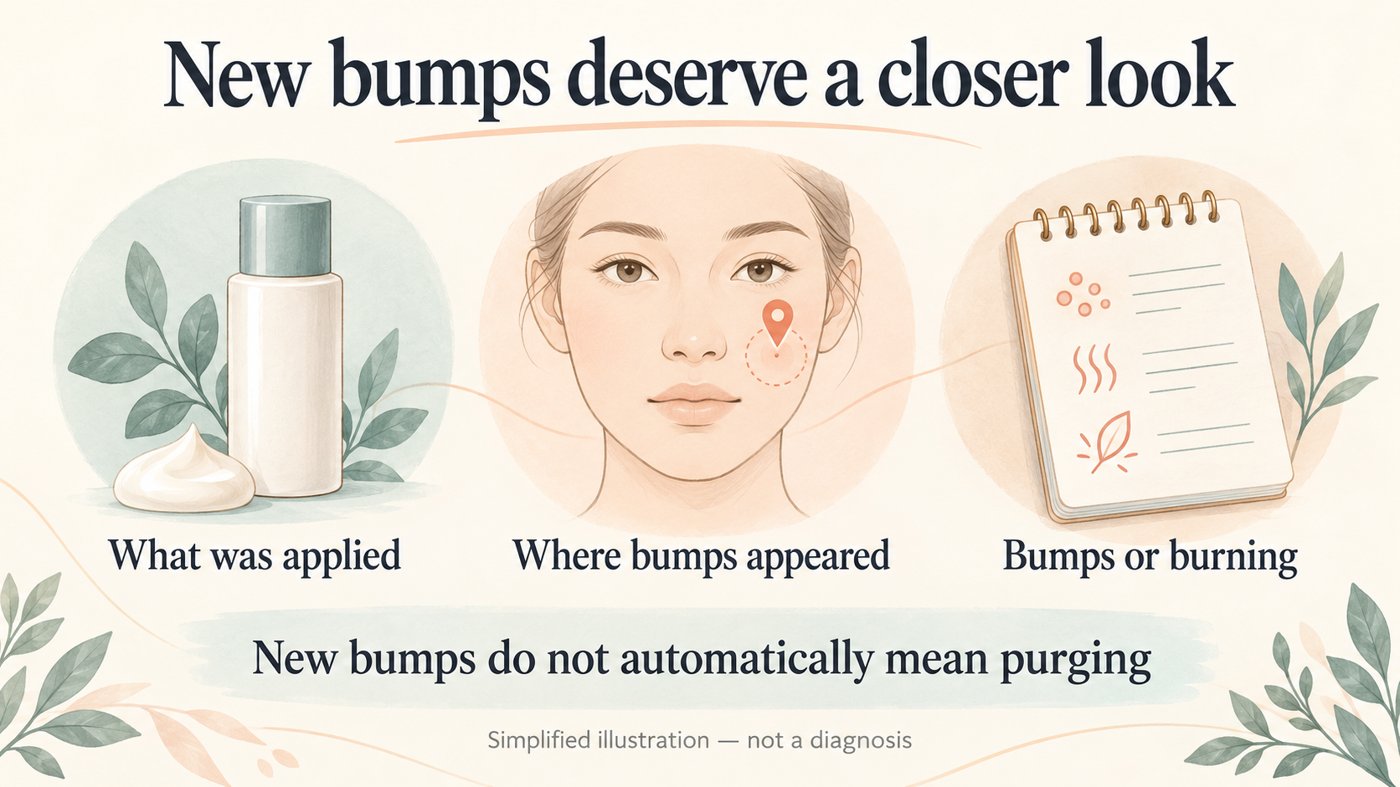
Purging, breakout or reaction: what's the difference?
| Purging or breakout | Irritation or allergic reaction | |
|---|---|---|
| How it looks | Small spots or bumps, often in your usual acne areas | Redness, rash, rawness, sometimes blisters or swelling |
| How it feels | Like your normal breakouts | Burning, stinging, soreness or intense itch |
| Where it shows up | Where you usually break out | Can spread beyond the treated area or your usual spots |
| What to do | Stick to your aftercare and keep an eye on it | Stop new products and contact your doctor or provider |
How it looks
- Purging or breakout
- Small spots or bumps, often in your usual acne areas
- Irritation or allergic reaction
- Redness, rash, rawness, sometimes blisters or swelling
How it feels
- Purging or breakout
- Like your normal breakouts
- Irritation or allergic reaction
- Burning, stinging, soreness or intense itch
Where it shows up
- Purging or breakout
- Where you usually break out
- Irritation or allergic reaction
- Can spread beyond the treated area or your usual spots
What to do
- Purging or breakout
- Stick to your aftercare and keep an eye on it
- Irritation or allergic reaction
- Stop new products and contact your doctor or provider
The key clue is how your skin feels, not just how it looks. Bumps on their own are one thing. Burning, rawness or a spreading rash are your cue to stop.
Signs it's time to stop and get advice
Stop any new product that seems to be causing a problem, and contact your doctor or the provider who did your treatment, if you notice:
- Burning, soreness or skin that looks or feels raw
- Swelling, blisters or cracked skin
- Intense itching or a rash that's spreading
- Lots of large or painful spots, or changes that keep getting worse
If you have difficulty breathing or swelling of your face, lips or tongue, get urgent medical help straight away.
What to do if you're getting new bumps
The instinct is to fight back with another product. Resist it. Adding a new exfoliant or spot treatment on top of skin that's already unsettled usually makes things worse. Instead:
- Stick to the aftercare you were given
- Keep your routine simple and gentle (our simple skincare routine guide covers the basics)
- Ask your provider for the names of products used during the treatment, if you don't have them
- Snap a few photos in the same lighting to track how things change
There's no universal "wait it out" timer. What matters is direction: if things are settling, great. If they're getting worse or staying uncomfortable, get it checked.
Started acne medicine at the same time?
If you began a prescribed acne treatment around the same time as your facial or peel, let your doctor know. Some acne medicines can cause an early flare, but your doctor is the right person to say whether that's what's happening, rather than assuming the word "purging" explains it.
How Reborn can help
At Reborn, our doctors assess what's behind a post-treatment flare before suggesting the next step, whether that's calming your skin, adjusting your routine or treating active acne. If your skin tends to react to products, our sensitive skin page explains how we help strengthen and stabilise reactive skin. For ongoing breakouts, see how we approach acne.
Frequently asked questions
How long does skin purging last?
It varies with the product and your skin. If bumps are steadily improving, that's a good sign. If they're worsening or uncomfortable, don't wait for a set number of weeks. Get it checked.
Can the location of the bumps tell me whether it's purging?
It's a helpful clue but not a reliable answer on its own. How your skin feels, such as itching or burning, tells you more.
Should I stop my skincare if I'm breaking out after a facial?
Pause anything new you've added, and keep the rest of your routine gentle. If you're on prescribed treatment, check with your doctor before stopping it.
Can a facial cause a breakout?
It can happen, especially if a product didn't suit your skin or your skin was already prone to breakouts. Your doctor can help work out the cause.
Not sure what your skin is doing?
Book a consultation at Reborn Skin Clinic, and bring your treatment details along. Our licensed doctors will assess the changes and help you decide on the right next step.