
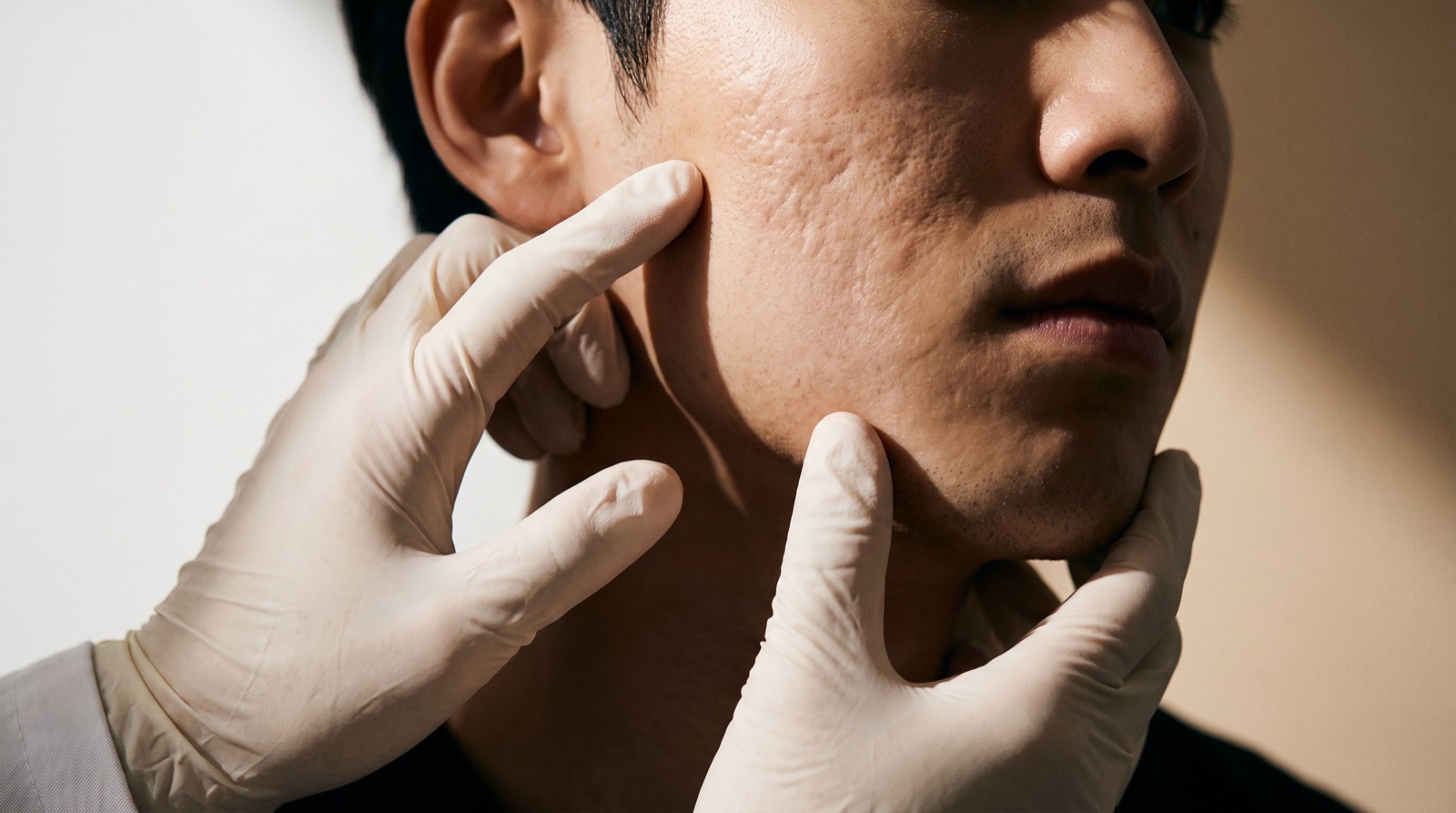
Tried lasers or microneedling, and some of your acne scars are still sitting low? The problem might not be on the surface at all. Some scars are tethered, held down by tight bands of scar tissue underneath. Subcision is the treatment designed to release them, which is why it's often the missing step for stubborn rolling scars.
Why do some acne scars stay sunken?
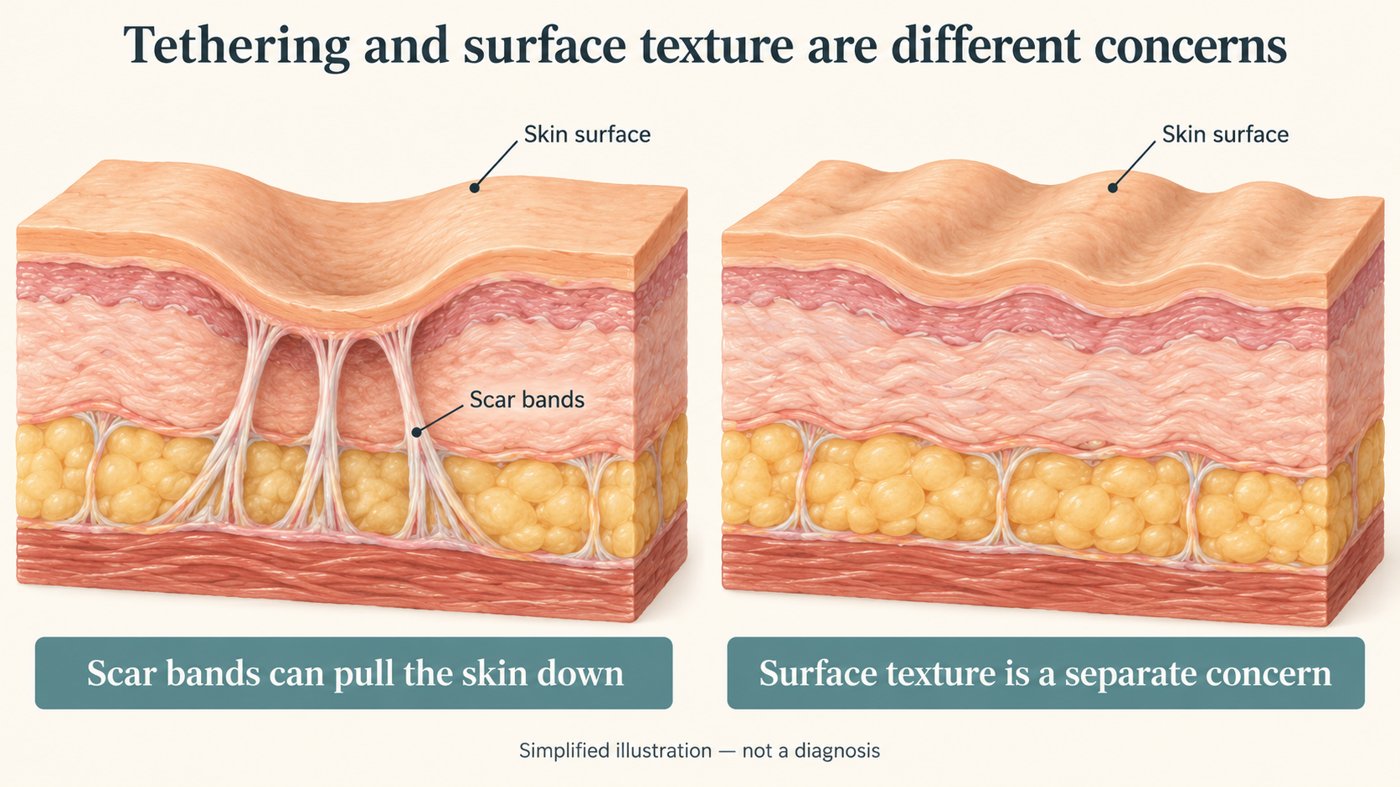
Rolling scars are broad, soft-edged dips that give skin a wavy, uneven look. As acne heals, bands of fibrous tissue can form beneath these scars and pull the surface down.
Think of a quilted cushion: the surface dips wherever a stitch holds it down. You can smooth the fabric all you like, but until the stitch is released, the dip stays. That's why treatments that work on texture alone don't always lift tethered scars.
What does subcision do?
Subcision uses a fine needle placed just beneath the skin to break those tight bands. Once the pull is released, the scar can lift. As the area heals, your skin also lays down new collagen, which helps support the lifted surface.
It's a targeted treatment for tethered scars, especially rolling scars, rather than a fix for every scar type.
Subcision vs laser: what's the difference?
They do different jobs, which is why they often work well together.
| Treatment | Main job | Often used for |
|---|---|---|
| Subcision | Releases bands holding a scar down | Rolling scars with tethering |
| Laser and RF microneedling | Encourage collagen remodelling and smooth texture | Uneven texture, boxcar scars, overall skin quality |
| Skin boosters and biostimulators | Support skin structure from beneath | Scars where some volume has been lost |
Subcision
- Main job
- Releases bands holding a scar down
- Often used for
- Rolling scars with tethering
Laser and RF microneedling
- Main job
- Encourage collagen remodelling and smooth texture
- Often used for
- Uneven texture, boxcar scars, overall skin quality
Skin boosters and biostimulators
- Main job
- Support skin structure from beneath
- Often used for
- Scars where some volume has been lost
Many people have a mix of scar types. Someone with rolling and boxcar scars, for example, might have subcision to release the rolling scars and laser to refine the texture around them. Your doctor will decide what combination makes sense and in what order.
Is subcision right for your scars?
It depends on what's keeping your scars low. Subcision is most useful when tethering is the main issue. Narrow, deep ice pick scars and scars caused mainly by volume loss usually need a different approach.
Your doctor will examine your scars in person to work this out, since it's hard to judge from a mirror or photo. It also helps to mention any active breakouts, a tendency to form raised scars, or anything that affects bleeding.
What results can you expect?
Subcision aims to soften tethered scars so they sit closer to the surrounding skin. Improvement builds as the skin heals, and some scars benefit from more than one session. Any remaining texture or sharp edges can then be refined with other treatments in your plan.
What's recovery like?
Expect some tenderness and bruising in the treated area, which usually settles over one to two weeks. Small firm lumps can form under the skin as it heals and typically soften with time. If you have an event coming up, mention it so your doctor can plan around it.
Because subcision works beneath the skin, the experience of the person treating you matters. Your doctor will take your scar location, nearby structures and medical history into account, and walk you through aftercare and possible risks before you start. Let them know about any medicines or supplements that affect bleeding, but don't stop a prescribed medicine without their advice.
Subcision at Reborn
At Reborn, subcision is often part of a wider acne scar plan, combined with laser, RF microneedling or skin boosters depending on your scars. For more advanced scarring, our Regenesis Prime programme brings several of these approaches together. Read more about how we treat acne scars, or check our guide to types of acne scars if you're not sure which kind you have.
Frequently asked questions
Is subcision better than laser for acne scars?
Neither is better overall. They solve different problems. Subcision releases tethering, while laser smooths texture. Many scar plans use both.
Does subcision hurt?
The area is numbed beforehand, so most people feel pressure rather than pain. Some tenderness afterwards is normal.
How many sessions will I need?
Some scars lift well after one session, while others need a few. Your doctor will plan this around your scars and how your skin responds.
Can I have subcision if I still have acne?
Active acne is usually brought under control first, so new breakouts don't undo your progress.
Scars that won't lift?
Book a consultation at Reborn Skin Clinic. Our licensed doctors will look at what's keeping your scars low and put together a plan to treat them.